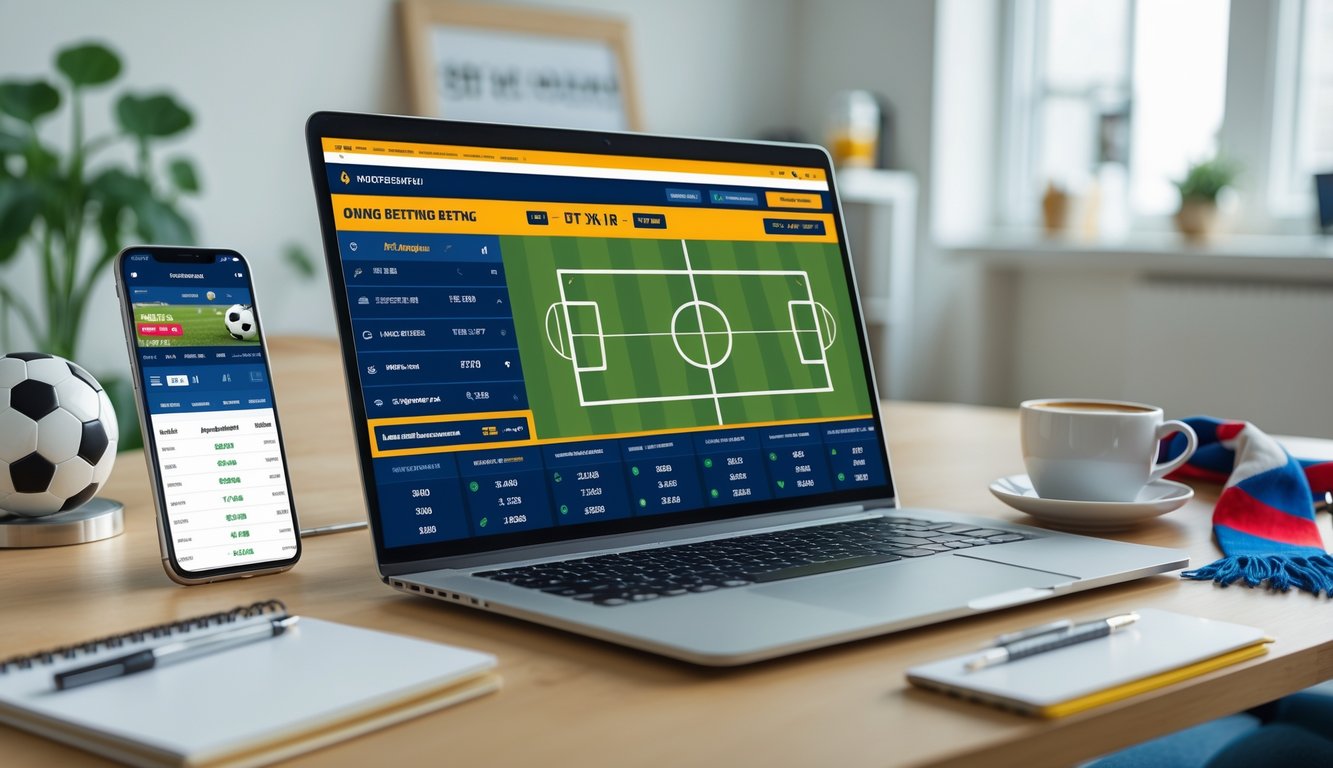
You want a bandar bola online that combines legal clarity, fair play, and consistently competitive odds so your stakes reflect real value. Choose platforms that show transparent licensing, stable markets, and odds that match or beat industry averages to maximize your expected return.
This article shows how to spot reputable operators, compare odds across markets, and evaluate features that make betting smoother and safer—from payment options to responsible-betting tools. Follow the practical checks and examples to decide which sites give you the best balance of security and value.
Understanding Official Online Sportsbooks in Indonesia
Official online sportsbooks operating for Indonesian players typically involve strict legal limits, offshore licensing, clear distinctions in platform practices, and specific security measures to protect funds and data. You’ll want to know which laws apply, how licensed and unlicensed sites differ in practice, and what technical and operational protections to look for.
Regulations Governing Online Betting
Indonesia’s national law criminalizes most forms of commercial gambling, so there are no domestic, government-issued licenses for sports betting that operate openly inside the country.
As a result, many operators accessible to Indonesian players hold offshore licenses from jurisdictions such as Curaçao, Malta, or Isle of Man. These licenses provide regulatory oversight, dispute resolution channels, and financial audits that you can verify on the operator’s site.
You should check licensing details on the sportsbook footer and confirm license numbers against the issuing regulator’s online register. Also look for published terms on responsible gambling, KYC (identity verification), and local payment method support to assess legal and operational transparency.
Differences Between Licensed and Unlicensed Platforms
Licensed sportsbooks publicly display their license, regulator contact, and independent audit or testing reports. They enforce KYC, use segregated or audited accounts for player funds, and publish clear bonus and withdrawal terms. This gives you avenues for dispute resolution and better protection of deposits.
Unlicensed platforms often omit verifiable licensing, provide vague terms, and may use opaque bonus rules or sudden account restrictions. You face higher risks: delayed or withheld payouts, weak identity checks (raising fraud or money-laundering exposure), and no formal regulator to appeal to.
Focus on verifiable items: license number, third‑party testing (e.g., RNG or odds audits), and readable withdrawal timelines before committing funds.
Security Measures for Player Protection
Prioritize sites using HTTPS/TLS, with a valid SSL certificate and modern cipher suites. Look for two-factor authentication (2FA) and device‑recognition features to reduce unauthorized access to your account.
Check for encryption of sensitive data, explicit privacy policies, and KYC procedures that protect against identity theft and fraud. Payment security matters: prefer operators offering reputable e‑wallets, bank transfers, or internationally recognized card processors with clear refund and chargeback processes.
Operational safeguards to verify include: regular security audits mentioned on the site, proof of segregated player funds or insurance, and transparent odds-setting or market sources. If a site publishes independent test certificates (e.g., eCOGRA-style reports), treat those as positive indicators of commitment to player protection.
How to Identify Reputable Operators
Focus on verifiable credentials, fast and helpful support, and clear financial practices. Check license details, response channels and times, deposit/withdrawal rules, and the evidence that transactions are auditable.
Verifying Legal Status and Certifications
Look for an explicit license displayed on the site, including license number and issuing authority (e.g., PAGCOR, Curacao, or a recognized European regulator). Click the license link and confirm it resolves to the regulator’s official site and that the license number matches the regulator’s registry.
Check for third-party audits or certifications (e.g., eCOGRA, GLI) for fairness and RNG testing. Screenshots or badges alone aren’t enough — verify reports or certificates by downloading or visiting the auditor’s site.
Review the operator’s corporate information: company name, registered address, and business registration number. If that information is absent, inconsistent, or hidden behind marketing pages, treat the operator as higher risk. Keep screenshots or copies of license pages for future disputes.
Customer Service Quality Indicators
Test multiple contact channels before depositing: live chat response within a few minutes, email replies within 24 hours, and an accessible phone number if listed. Note the tone and knowledge of agents; they should answer policy and payout questions directly and cite relevant terms or rules.
Check for published support hours and language options that match your needs. Read recent user reviews focused on dispute resolution and withdrawal help rather than isolated praise. Monitor escalation paths: a clear complaint procedure, claim reference numbers, and a named manager or compliance contact indicate better accountability.
Transparency in Transactions
Verify deposit and withdrawal terms on a dedicated page: minimums, maximums, fees, processing times, and required KYC documents. Prefer operators that state exact processing windows (e.g., “withdrawals processed within 24–72 hours”) and list any third-party payment providers they use.
Inspect transaction history capabilities in your account area. You should be able to export or view timestamps, method, amounts, and status for each deposit and payout.
Look for publicly posted terms on bonuses, rollovers, and chargebacks. Avoid sites that hide wagering requirements inside FAQs or only disclose them after you claim a bonus. If possible, test a small deposit and withdrawal to confirm the site’s stated timelines and fee structure match your experience.
The Importance of Competitive Odds
Competitive odds determine how much value you get from each wager, how likely a market reflects true probabilities, and how bookmakers allocate risk across events. You’ll learn how odds are set, how they change your potential payout, and why different formats matter for comparing offers.
How Odds Are Calculated
Bookmakers start by estimating the true probability of each outcome using data: team form, head-to-head records, injuries, venue, and market sentiment. You should expect models that combine statistical algorithms and expert adjustments rather than a single formula.
After deriving implied probabilities, the bookmaker applies a margin (vig) to ensure a house edge. For example, if true probabilities sum to 100%, a bookmaker might scale them to 107% — that extra 7% is the built-in profit. Odds you see convert directly from those adjusted probabilities, so a smaller margin means odds closer to real value and better long-term returns for you.
Market forces then shift odds. Large bets, new information, or competing books’ prices will force odds to move. You can monitor line moves to spot sharper opinion or value opportunities.
Impact of Odds on Potential Payouts
Odds directly set your payout: higher odds yield larger returns for the same stake. For decimal odds, multiply stake by the odds to get total return; for example, a 100,000 IDR stake at 2.50 returns 250,000 IDR (profit 150,000 IDR). Knowing this arithmetic lets you compare offers quickly.
Margins reduce expected value. If two sites offer 2.50 and 2.40 for the same selection, the 2.50 line gives you a 4.2% higher payout on the same stake. Over many bets, that difference compounds and affects your bankroll trajectory. You should track and prefer sites that consistently display tighter margins for markets you play most.
Promotions and boosted odds change short-term payouts but often come with rollover or stake limits. Read terms, calculate net gain after constraints, and favor straightforward higher base odds for sustained advantage.
Variations of Odds Formats
You’ll encounter three common formats: decimal, fractional, and American. Decimal (e.g., 2.50) is most used in Indonesia’s online books and shows total return per unit staked. It’s simple: stake × decimal = total return.
Fractional (e.g., 3/2) expresses profit relative to stake and suits branch bettors but requires conversion to decimal for easy comparison. American (+150 or -200) indicates profit on a 100-unit stake for positive values or stake needed to win 100 for negative values. Convert American to decimal to compare lines across books.
Always convert odds to implied probability to assess value: Decimal implied probability = 1 / decimal odds. Use this to compare across formats and to calculate bookmaker margin when summing implied probabilities across all outcomes.
Platform Features That Enhance User Experience
A high-quality platform reduces friction when you place bets, manage your account, and follow live action. Expect clear navigation, fast load times, responsive mobile support, and transparent market displays that make it easy to compare odds and execute bets.
User Interface Accessibility
Design should prioritize clarity and speed so you can find markets and place bets within seconds. Look for a consistent layout with a persistent market filter, prominent odds display, and an inline bet slip that updates immediately when you change stakes or selections.
Color contrast and legible type sizes matter for long sessions; adjustable font scaling or a compact mode helps if you use smaller screens.
Keyboard shortcuts, ARIA-compliant labels, and screen-reader compatibility improve access if you rely on assistive tech.
Accessibility settings should include language selection, localized odds formats (decimal/frac/american), and an easy-to-reach help icon for live chat or FAQs.
Mobile Betting Capabilities
Mobile apps and responsive websites must offer parity with desktop features so you never lose functionality on the go. Native apps (iOS/Android) should support biometric login, push notifications for cashouts or score changes, and background updates for live odds.
A responsive web interface works well when an app isn’t available; it should use adaptive navigation, touch-friendly controls, and minimized page weight to cut data usage and loading time.
Fast deposit/withdraw flows with stored payment methods and one-tap staking reduce friction.
Offline resilience — brief caching of markets and resumed sessions after reconnection — prevents lost bets during spotty mobile coverage.
Live Streaming and In-Play Options
Live streaming should pair with live markets so you can watch and react without third-party services. Streams must sync with in-play odds and provide minimal latency; a small delay under a few seconds keeps cashout and live-bet decisions accurate.
In-play markets should refresh frequently and indicate when odds are suspended (e.g., during goals or fouls). Look for micro-markets (next-goal, next-corner) and advanced cashout controls that let you set auto-cashout thresholds.
Supplementary data—real-time stats overlays, heatmaps, and event timelines—helps you judge momentum quickly.
Clear labeling of market status, market closing times, and settlement rules prevents surprises when you place live bets.
Popular Sports and Markets Among Indonesian Bettors
Indonesian bettors concentrate on a few high-demand sports and market types where liquidity, live betting, and local knowledge provide the best value. You’ll find specific leagues, match-level markets, and seasonal tournaments dominate volume and odds competition.
Most Bet-On Sports Categories
Football (soccer) sits at the top of betting volume. You’ll see heavy action on Liga 1, the English Premier League, La Liga, and major international qualifiers. Popular bet windows include pre-match 1X2, Asian handicap, and full-time totals.
Badminton attracts steady wagers, especially during the Indonesia Open, Thomas & Uber Cups, and Olympic cycles. Match winner, game handicaps, and set totals are common markets you’ll encounter.
Basketball betting focuses on the NBA and local Indonesian League matches. Point spreads and over/under totals draw consistent bets, plus live quarter-by-quarter markets during matches.
Esports has grown rapidly; Mobile Legends, Dota 2, and PUBG see strong interest. You’ll bet on map winners, series results, and in-play objectives for major events.
Types of Betting Markets Offered
Bookmakers in Indonesia typically offer these market groups: match outcome, handicaps, totals, outright futures, and player-specific props. You’ll find Asian handicap formats widely used because they reduce variance and offer clearer pricing.
Live/in-play markets appear for most major sports, with cash-out features and micro-markets (next goal, next set) for football and badminton. Fixed-odds futures cover season winners, relegation battles, and top-scorer markets.
Specialized markets include parlay (mix parlay) bets tailored to local bettor preferences, and exchange-style odds in a few platforms. Odds formats include decimal and localized displays compatible with Indonesian Rupiah.
Special Events and Tournaments
Domestic tournaments drive spikes in liquidity. You’ll see sharp increases during the Indonesia Open (badminton) and Liga 1 derbies, where local form and player knowledge matter most.
International events such as the FIFA World Cup, UEFA Champions League, and major tennis Grand Slams attract cross-market action and higher max stakes. You’ll often get enhanced odds promotions around these events.
Esports majors—The International, M4 Mobile Legends World Championship—create concentrated betting windows with many niche markets. Tournament brackets and series handicaps become available well before match day.
Bonuses and Promotional Offers for New and Existing Users
You can expect welcome bonuses, recurring promos, and loyalty rewards from licensed Indonesian bookmakers. Pay attention to the bonus type, minimum deposit, and the wagering rules attached to each offer.
Welcome Bonuses Explained
Welcome bonuses typically come as matched deposit offers, free bets, or risk-free first bets. A common structure is a 100% match up to a set cap (for example, IDR 1,000,000) where you must deposit at least the stated minimum (often IDR 25,000–50,000) to activate the bonus.
Key items to check:
- Bonus cap and match percentage — determines the maximum bonus you can receive.
- Eligible markets — some bonuses apply only to specific sports or bet types (e.g., football 1X2 or Asian handicap).
- Expiry window — welcome funds often expire within 7–30 days.
If the offer is a free bet, note whether stake returns are included or excluded from winnings. For risk-free bets, understand the refund method (cash or site credit) and any limits on refunded amounts.
Loyalty Programs and Rewards
Loyalty programs reward regular play with points, tier upgrades, or cashback. Points are usually earned per wagered amount (e.g., 1 point per IDR 10,000 staked) and convert to bonuses, free spins, or cash equivalents at preset thresholds.
Typical components:
- Tier levels — Bronze to VIP, with higher tiers granting faster point accrual, personal account managers, and exclusive promos.
- Point expiry and conversion — check how long points last and the conversion rate to bonus value.
- Targeted perks — birthday bonuses, deposit-free spins, or improved odds on select markets.
You should compare programs by effective value (points per stake × conversion rate) rather than promotional language. Also verify whether cashback applies only to net losses over a period or to gross stakes.
Wagering Requirements Overview
Wagering requirements (rollover) dictate how many times you must bet bonus funds before withdrawal. Common examples: a 10x wagering requirement on a IDR 500,000 bonus means you must place bets totaling IDR 5,000,000 before cashing out.
Important specifics to check:
- Contribution rates — different bet types contribute unevenly (e.g., singles 100%, system bets 50%, some markets 0%).
- Minimum odds — many bonuses require bets at or above a set odds threshold (e.g., ≥1.50 or -150).
- Time limits and multiple offers — confirm how long you have to meet rollover and whether multiple active bonuses stack.
Always calculate the realistic cost: multiply the bonus amount by the rollover and adjust for contribution rates and realistic win rates to see if the promotion benefits you.
Safe and Efficient Payment Methods
Choose payment options that balance speed, fees, and legal safety. Prioritize methods that let you deposit quickly, withdraw without unreasonable limits, and keep your account data protected.
Local and International Payment Options
Use Indonesian-friendly options: bank transfers (BCA, Mandiri, BNI), e-wallets (OVO, DANA, LinkAja), and pulsa/top-up where supported. These local channels minimize conversion steps and often avoid extra international fees. Check whether the site accepts transfers via local bank VA (virtual account) — it simplifies deposits and provides clear transaction records.
International methods can be useful when local options are limited. Look for Skrill, Neteller, and major credit/debit cards (Visa, Mastercard) for broader acceptance. Cryptocurrency (Bitcoin, USDT) appears on some sites; it offers fast settlement but watch for price volatility and confirm on-chain addresses before sending.
Compare fee structures and currency handling. Some sites convert IDR to USD or THB internally; this can add hidden costs. Always verify accepted currencies, deposit minimums, and whether the operator supports your local bank or e-wallet.
Withdrawal Speeds and Limits
Withdrawal speed varies by method and operator verification status. E-wallets and crypto withdrawals often clear within minutes to a few hours once your account is verified. Local bank withdrawals typically take 1–3 business days, depending on the sportsbook’s processing schedule.
Confirm daily and monthly withdrawal limits before you wager. Many reputable operators set tiered limits tied to verification level (unverified accounts have lower caps). High rollers should request higher limits and provide KYC documents early to avoid delays.
Watch for processing fees and hold periods. Some sites impose a manual review for large payouts, which adds 24–72 hours. Keep a record of withdrawal timestamps and transaction IDs to resolve disputes quickly.
Tips for Secure Transactions
Enable two-factor authentication (2FA) on your betting account and on linked email addresses to reduce account-takeover risk. Use unique, strong passwords for each payment method and update them periodically.
Verify payment endpoints carefully. For bank transfers, use the exact virtual account number shown in your account; for crypto, double-check the wallet address and copy-paste rather than typing. Avoid public Wi‑Fi when making deposits or accessing payment apps.
Keep KYC documents secure and only upload them through the operator’s encrypted portal. Save receipts and screenshots of successful deposits and withdrawals for at least 90 days. If you suspect fraud, contact both your bank/e-wallet provider and the sportsbook immediately and freeze further transactions until the issue resolves.
Responsible Betting Practices and Self-Exclusion Tools
You should protect your bankroll and mental health by using concrete tools and by watching for behavioral changes that signal risk. Practical measures include preset deposit and loss limits, time controls, and formal self-exclusion options that block access for defined periods.
Setting Limits and Managing Budgets
Set a weekly or monthly deposit cap tied to your actual disposable income, not expected winnings. Use the operator’s deposit limits and loss limits first; if those aren’t enough, enable session time limits or cooling-off periods to prevent extended play.
Track every stake and return in a simple spreadsheet or app so you see net results across days and weeks. Treat betting like an entertainment expense: decide on a fixed percentage of your entertainment budget and never chase losses by increasing that percentage. If available, link betting accounts to payment blocks (card or e-wallet restrictions) and activate mandatory reality checks that notify you after set play intervals.
If you can’t keep to your limits, use self-exclusion. Choose the shortest effective exclusion (30 days) or a longer-term ban (6–12 months or permanent) and follow the operator’s verification steps to ensure the block applies to all your accounts.
Recognizing Signs of Problem Gambling
Noticeable signs include increasing stake sizes despite losses, borrowing money to bet, and hiding betting activity from close contacts. If you feel preoccupied with betting, lie about time spent, or skip bills and responsibilities, those are clear red flags.
Monitor emotional triggers: betting to escape stress, anxiety, or boredom often precedes loss of control. Frequent cravings to log in after a loss and unsuccessful attempts to cut down are behavioral markers that you need outside help.
If you observe multiple signs, activate self-exclusion and contact professional services listed by the operator or local helplines. Use support tools—blocking software, therapy referrals, and financial counseling—to regain control and protect your finances.
The Future of Online Sports Betting in Indonesia
You will see growth in user interest driven by mobile access and improved payment options. More Indonesians already use smartphones for entertainment, which lowers the barrier to joining online betting platforms despite legal restrictions.
Regulation remains the key unknown. Current law prohibits most gambling activities, so any market expansion depends on legal changes or tightly regulated pilot programs. You should follow official updates and local guidance before participating.
Operators will likely focus on competitive odds and localized services to attract Indonesian users. Expect better odds comparison tools, localized customer support, and promotions tailored to regional preferences.
Responsible gaming and security will matter more. You should prioritize platforms with strong identity verification, encrypted transactions, and clear responsible-gaming policies to reduce risk.
Key trends to watch:
- Increasing mobile-first platform development
- Improved payment integrations and crypto exploration
- Potential legal debate or targeted regulatory shifts
- Enhanced security and responsible-gaming measures
If you consider using a site, verify its licensing status, review user feedback, and check payment safeguards. Doing so helps you manage legal and financial risks while navigating an evolving market.